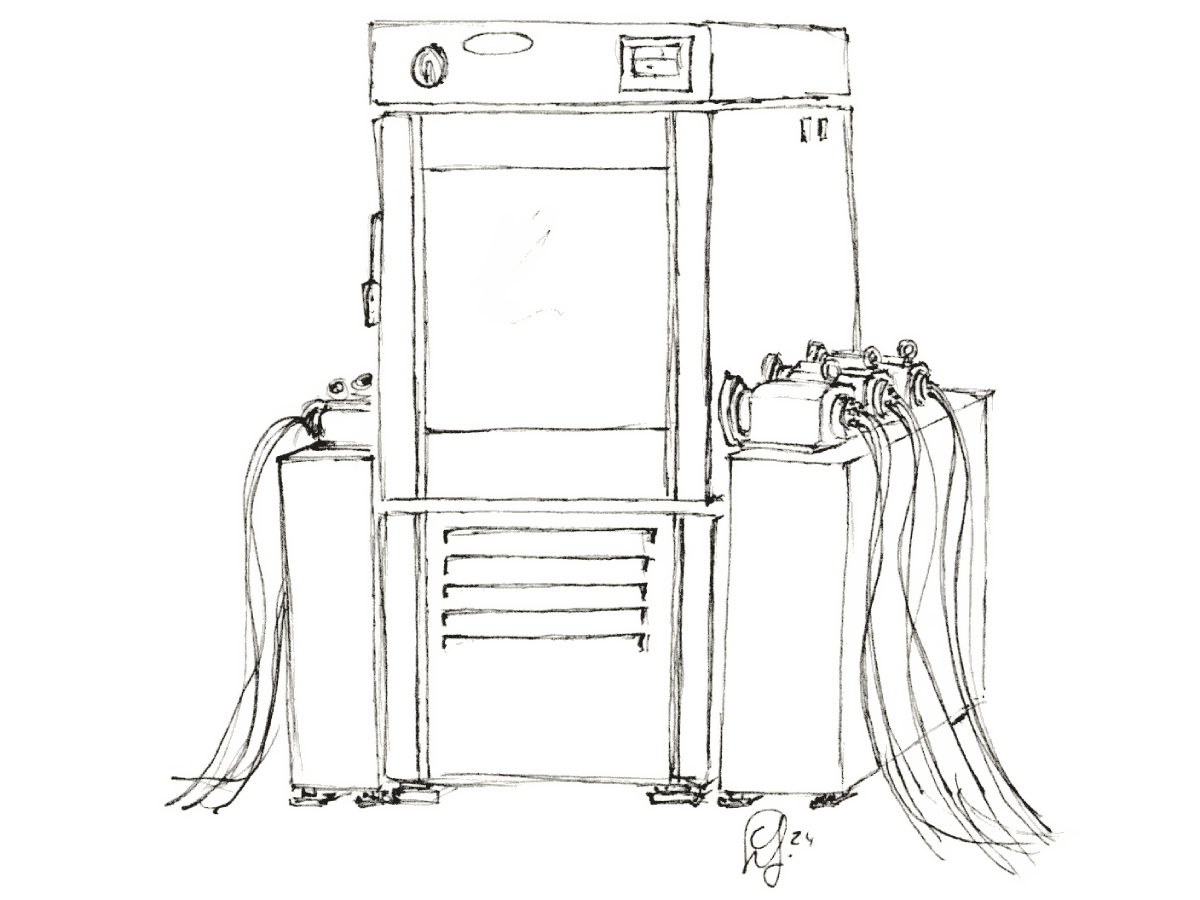
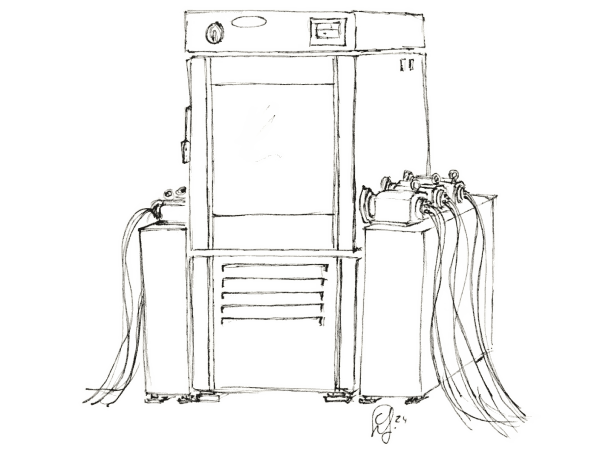
Many tests need actuators, hydraulic cylinders or measurement systems that are not rated for the extreme temperatures inside the chamber. These components have to sit outside the chamber, which calls for carefully engineered mechanical and electrical feedthroughs.
Realistic test conditions: temperature and humidity testing in the test stand
Heat, cold, humidity, rapid temperature changes: in real life, technical components are often exposed to extreme environmental conditions. Testing products under those conditions calls for reliable environmental simulation. Test stands with integrated climate chambers do exactly that: realistic, repeatable tests under defined ambient conditions. That reduces risk, secures quality and saves cost in the long run.
TMX Solutions develops test stand solutions with precisely controllable climate chambers, temperature chambers and humidity chambers that adapt to different test tasks. Development, validation or quality assurance: our systems give you full control over climatic conditions during mechanical, electrical or functional tests.
Typical uses of climate chambers in test stands include thermal cycling tests, humidity and condensation tests, aging tests and heat dissipation studies on active components. These simulations are an integral part of our custom test stand solutions, from pure environmental simulation to combined mechanical and climatic testing.
Typical challenges of climate integration in test stands
Combining mechanical test tasks with controlled environmental simulation places special demands on planning, construction and operation. These challenges come up again and again:
Temperature-sensitive components
Moving feedthroughs and sealing
If rotating, vibrating or linearly moving elements have to reach into the chamber, sealing against air, humidity and temperature loss is a real technical challenge. Special shaft or bellows seals are needed to allow movement and keep the chamber tight.
Condensation and moisture ingress
With strongly fluctuating temperatures, especially near or below the dew point, condensation can form inside the chamber. That endangers the device under test as well as sensors, wiring and insulation. Humidity management and suitable materials are decisive.
Uniform airflow around the device under test
Repeatable results require uniform, defined airflow or humidity around the DUT. Dead zones, hot spots or uncontrolled air routing distort the measurement. Optimized air routing inside the chamber is a must.
Active cooling of heat-dissipating DUTs
Devices with high power losses (e.g. electric motors or control units) release additional heat into the chamber during the test. It has to be removed actively to keep the climatic boundary conditions stable, using additional cooling systems or internal heat exchangers.
Thermal inertia of large or massive DUTs
Large devices often need a long time to reach their target temperature, especially at low temperatures. A suitable control strategy and sufficient heating and cooling capacity are essential so test times do not grow unnecessarily.
Typical tests and applications with climate chambers
Climate and temperature chambers are central tools for testing components under realistic environmental conditions. Combined with a test stand, or as an integral part of a test system, they enable a wide range of practical test scenarios:
Thermal cycling tests
Rapid changes between heat and cold to detect material stress, cracking and thermal expansion, e.g. in electronic modules, housings or sensors.
Humidity and condensation tests
Simulation of high humidity or condensation to assess the tightness and corrosion susceptibility of parts, e.g. sealing systems, circuit boards or connectors.
Aging and service life tests
Accelerated aging through cyclic climatic stress to identify weak points, e.g. in plastics, adhesive joints or electronic components.
Functional tests at extreme temperatures
Verifying function from -40 °C to +150 °C, e.g. for automotive components, sensors or actuators.
Combined environmental and functional tests
Functional tests under simultaneous mechanical and climatic load in the test stand, to analyze thermal behavior, heat dissipation and functional influences.
Temperature-dependent characteristic measurement
Analysis of torque, friction, current consumption and more as a function of temperature profiles, ideal for modeling and validating simulation data.
THE SOLUTION
TMX solutions: climate chambers for your test requirements
Compact single chamber or walk-in system: TMX offers a well-rounded portfolio of climate chambers for integration into test stands or as standalone environmental simulation within complex test setups. Together we choose the right concept: flexible, scalable and future-proof.
Standard climate chambers
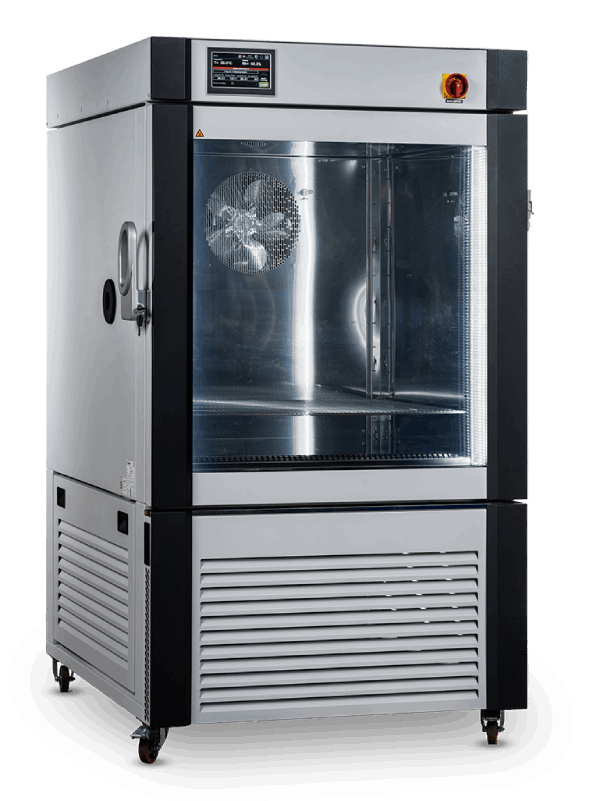
Our solutions with standard climate chambers are ready to use and ideal for typical test tasks. They cover a temperature range from -40 °C to +180 °C and reach temperature change rates of up to 10 K/min depending on the model. Available in various sizes (68 l to 1000 l), they come as standard with:
Custom climate chambers
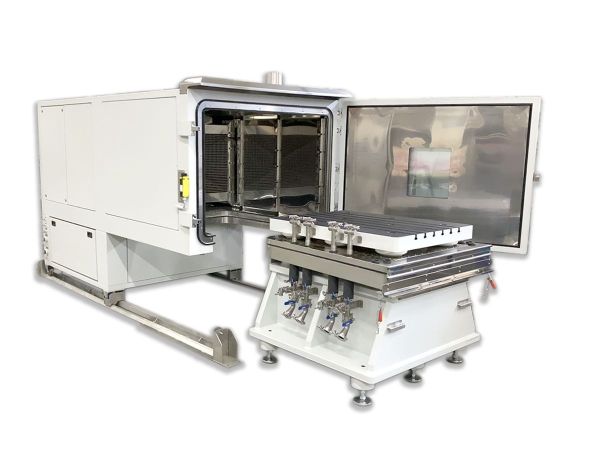
Need a chamber that matches your test task exactly? We develop custom solutions with individually configured climate chambers:
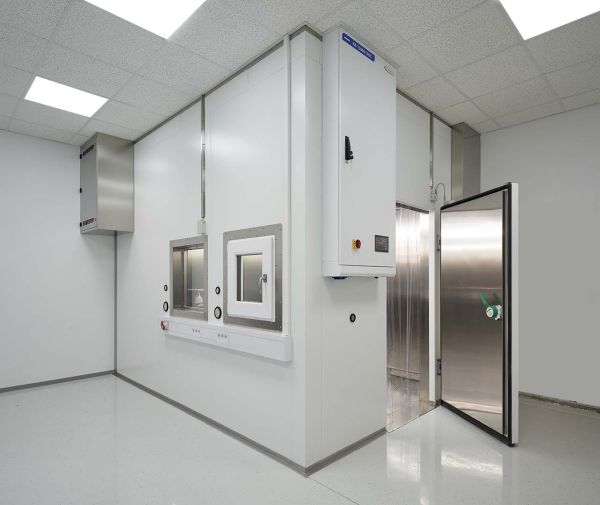
Walk-in climate chambers
For large devices under test such as machines, drivetrains or complete vehicles we offer fully customizable walk-in climate chambers with up-to-date technology:
Highlights of our integrated climate chambers
- Excellent temperature and humidity stability
- Very powerful heating and cooling system
- PID control for intelligent temperature and humidity distribution
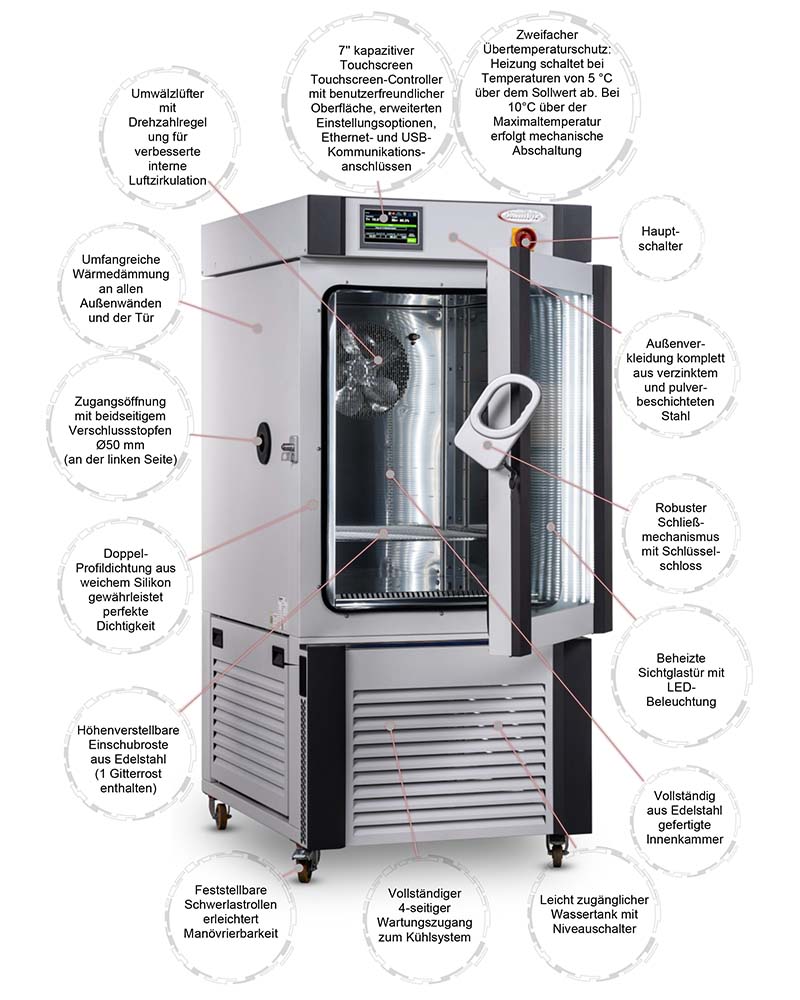
- Fast maintenance: all-round access to the cooling system
- User-friendly control: touchscreen with key operation, USB, RS-232 and network connection
- Flexibility in test operation: casters, height-adjustable shelves, accessory modules
- Reliable sealing: double silicone profile seals and heavy-duty locking mechanism
Chamber design
Our climate chamber solutions stand out through well-thought-out design, high-quality materials and current technology; every detail contributes to accuracy and reliability.
Software and control
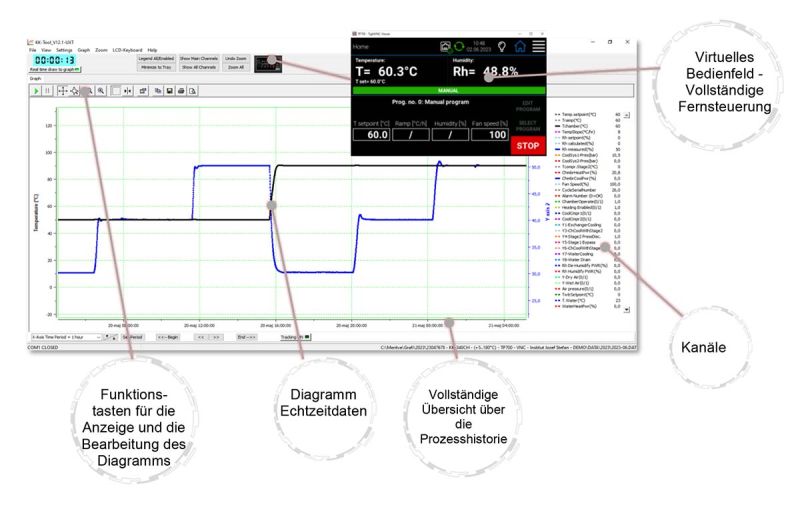
All climate chambers come with a powerful, intuitive controller. Temperature ramps, cycles, multi-stage programs and long-term simulations are easy to parameterize.
Combined with the TMX sequence editor you can link climatic test conditions directly with electrical or mechanical test sequences, for fully automated, safe and traceable testing.
Test stand examples with environmental simulation
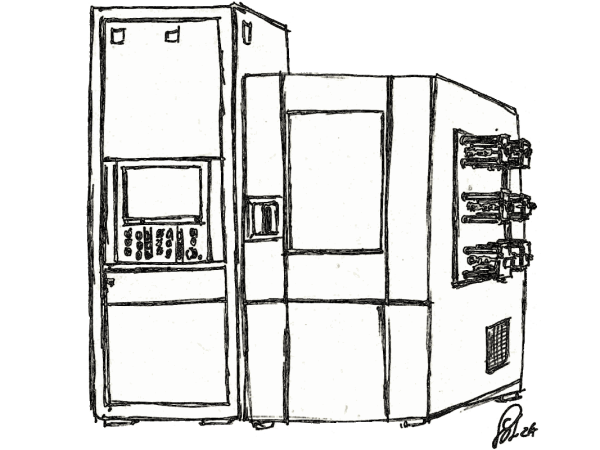
Here you will find examples of test stand solutions with an integrated climate chamber for environmental simulation.
YOUR CONTACT
Let's talk
Planning a climatic test, want to combine environmental simulation with mechanical testing, or looking for the right climate chamber for your test stand? Talk to an engineer. We advise you practically and without obligation, whether you have a first idea or detailed requirements.