Test stands that grow with your requirements

Custom test systems for demanding testing tasks in automotive, rail, machinery and wind power. Modular, accurate and built to last.

NEXT LEVEL TESTING

Test systems that fit the job

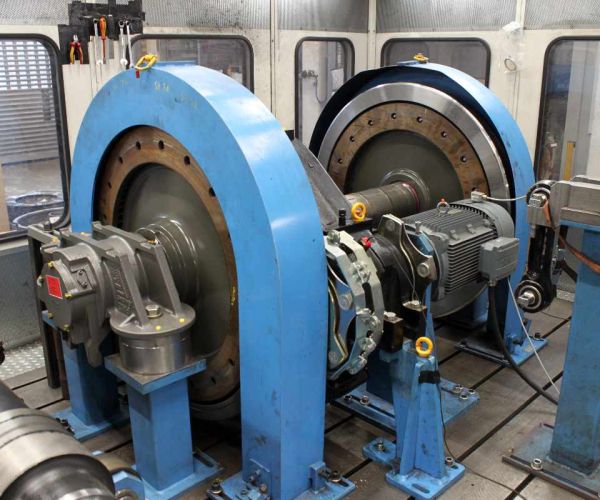
Test stands sit at the center of every validation process. Whether you need a single test rig or a complete test field, TMX Solutions designs and builds test systems to match your application, from automotive components to heavy machinery. Call it a test stand, a test bench or a test rig: what matters is that it delivers accurate, repeatable results through every phase of your product's life.

A test stand for every phase of the product lifecycle

From first prototype to series production, our test systems cover every stage of development.

Produkt- Einstellung Produktions- Beginn Fertigungs- Freigabe Prototypentest & Validierung Produktdesign & Entwicklung Entwicklungsprüfstand Komponentenprüfstand Funktionsprüfstand HiL-Prüfstand Dauerlaufprüfstand EoL-Prüfstand Modernisierung / Retrofit
Icon of a light bulb with cogwheel

Development test stands

Test and refine systems early in development: flexibly, iteratively and under realistic conditions.

Development test stands

Icon with a cogwheel on a test table

Component test stands

Check individual parts for performance, reliability and service life, with results you can repeat.

Component test stands

Icon with a cogwheel and two arrows in a circle

Hardware-in-the-loop test stands

Realistic testing when the environment of the device under test has to be simulated, long before the full system exists.

HiL test stands

Icon with an hourglass and an arrow running counterclockwise around it

Endurance test stands

Find out how components and systems hold up over time. Automated endurance testing over days, weeks or months.

Endurance test stands

Icon of a production process

End-of-line test stands

Fast, reliable series testing: clear pass/fail results, short cycle times and complete quality assurance before shipment.
End-of-line test stands

Who our test systems are for

We build test systems for engineers who need accurate, reliable testing processes, above all in automotive, rail, mechanical engineering, e-mobility and energy.

Icon of a light bulb with cogwheel

Development

Development and test engineers need accurate, flexible test systems to bring new products to maturity and to see how components interact early on.

Icon of a list with a check mark

Quality assurance

Your job is to make sure every product meets the standard. Test stands catch defects early and keep product quality consistent.

Icon of a production process

Production

Production managers need end-of-line test systems that confirm correct assembly and full functionality without adding to the cycle time.

Typical devices under test

Specialized test stands for a wide range of components.

Gearbox test stands

Test stands for every kind of gearbox and application: automotive transmissions, rail and industrial gearboxes, wind turbine gearboxes.

Rotor position sensor test stands

From development validation to end-of-line testing of rotor position sensors and resolvers: function, temperature behavior and endurance under demanding conditions.

Tire and wheel test stands

Modular test systems for tires and wheels in development and quality assurance: wheel load, centrifugal force, spring characteristics, endurance and customer-specific test scenarios.

Traction motor test stands

Test stands for large electric motors: drive motors in passenger cars and commercial vehicles, traction motors in rail vehicles, construction and agricultural machinery and ships.

Don't see your device under test?

We design test stands for almost any component and application.

What else we do

Services that keep your test infrastructure flexible and productive for years.

Retrofit and modernization

Many test stands are mechanically sound but technically out of date. We replace the electrical equipment, controls and software, improve accuracy and throughput and bring the system up to current standards, documentation and CE marking included.

Test stand automation

A test stand is only as good as its automation. We develop the control, closed-loop control and measurement technology plus the software that runs your tests faster and keeps the system future-proof.

Test stand technology

High-performance test systems come from mechanics, measurement technology, controls and software working together. Our technology delivers accurate results, high reliability and room to expand.

Frequently asked questions about test stands

The most important answers at a glance

A test stand (also called a test bench or test rig) is a dedicated installation for testing components, assemblies or complete systems under controlled conditions. It exposes the device under test to real or simulated loads, from mechanical stress and temperature to electrical load cycles, and records how it responds. This makes tests of function, service life, performance and quality repeatable across the whole product lifecycle.

How a test stand is built: A typical test stand has four core elements: the mechanics (fixtures, drives, loading units), the measurement technology (sensors, data acquisition), the control system (PLC, real-time control) and the test software for sequencing, evaluation and reporting. Depending on the task, climate chambers, hydraulic power units or safety enclosures are added.

Where test stands are used: Wherever products have to be validated under defined conditions: in automotive (gearboxes, engines, tires), in rail (brakes, bogies, traction drives), in mechanical engineering (pumps, valves, hydraulics), in e-mobility (batteries, power electronics, charging) and in energy (wind turbine gearboxes, generators, transformers).

They support the full lifecycle, from development through quality assurance to end-of-line testing.

The type follows the purpose: development test stands for product development, component test stands for individual parts, functional test stands for system tests, hardware-in-the-loop (HiL) test stands for virtual integration, endurance test stands for long-term tests and end-of-line (EoL) test stands for production quality assurance.

That depends on scope and complexity. A standardized test stand can be delivered in 8 to 12 weeks. Complex custom systems with extensive automation take 4 to 9 months from concept to commissioning. Lean processes and modular design keep our lead times short.

Yes. Every test stand goes through the full CE process: risk assessment, selection of the right safety components and complete documentation.

Just ask. We give you a quick first estimate based on your requirements, so you know early on whether the project fits your budget.

YOUR NEXT STEP

Talk to an engineer

We advise you independently of any vendor and with 20 years of test stand engineering behind us. Book a free consultation. We look forward to hearing from you.

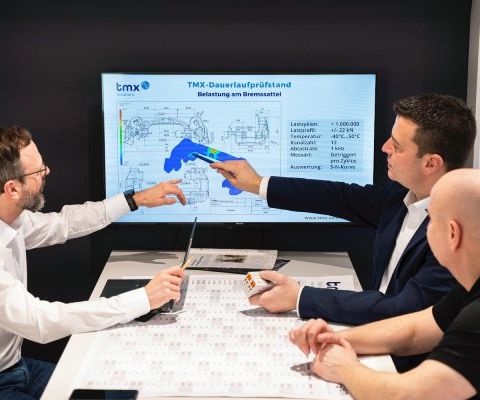
Engineer analyzing test stand measurement data on a computer

THE CHALLENGE

What our customers are up against

Every test project has its own obstacles. These are the ones we solve most often.

Aging test stands

Retrofit

We bring existing test systems up to date instead of replacing them.

Changing requirements

Flexibility

Our test systems adapt to new test cases and can simulate operating conditions or missing components.

Results you can't trust

Accuracy

Careful planning, solid engineering and high-accuracy measurement technology give you results you can rely on.

Tests that take too long

Efficiency

Automated test sequences shorten test times and cut out manual errors.

THE SOLUTION

Why TMX test stands

Our test systems combine proven technology, high accuracy and designs tailored to your application. The result: testing processes that run faster and demanding test tasks you can actually complete.

Short lead times

Lean processes and flexible manufacturing get your test stand commissioned quickly.

Built for your application

From measurement technology and control algorithms to software: no off-the-shelf compromise, just a test stand that fits your requirements.

Open and expandable

Future-proof systems that grow with your needs and integrate with your existing IT.

Experience and innovation

More than 20 years of test engineering, from self-learning control algorithms and clever mechanics to complex data acquisition.

Flexible and scalable

Open, modular designs adapt to new requirements. Ideal for projects that keep changing.

Easy and safe to operate

Intuitive, ergonomic and safe. Less training, fewer mistakes.

Durable and easy to maintain

Maintenance-friendly designs and spare parts planning keep downtime to a minimum.

A partner, not just a supplier

We build test stands, and we build working relationships based on trust, fairness and enthusiasm for the job.

Accountable and reliable

As general contractor for complex projects or supplier of turnkey systems, we take responsibility for quality and results.

For us, developing test stands is more than engineering, it's a passion. We love a tricky problem, and we bring that enthusiasm to every project. Our customers get a system that fits, and a partner who thinks ahead, adapts quickly and works with them as equals.

— Christian Perdok, Managing Director Test Stands & Engineering

From requirements to commissioning in five steps

01

Requirements and concept

Which tests do you need to run, and under which conditions? We define the requirements together and develop a test stand concept that fits.

02

Engineering and component selection

Mechanics, controls, measurement technology, software: we combine proven industry standards with new ideas for a system that performs now and later.

03

Manufacturing, assembly and software integration

We build and assemble your test stand and integrate the software, with accuracy in every detail and a modular architecture for future extensions.

04

Commissioning and validation

We run the first tests, fine-tune the system and validate the test stand under realistic conditions.

05

Training, documentation and support

Thorough training and complete technical documentation get your team up to speed. Maintenance and support keep the system running for years.

Examples from our portfolio

A selection of test stands we have built for different industries and test tasks.

Rotor position sensor test stand

  • Device under test: rotor position sensor for electric motors
  • Test task: influence analysis of fault patterns
  • Type: development test stand
  • Industry: e-mobility

Test solutions for rotor position sensors in every scenario: high-precision analysis of eccentricity, tilt and axial offset, speeds up to 24,000 rpm, service life testing.

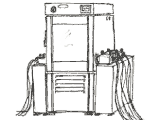
Hand drawing of a test stand with climate chamber

Endurance test stand for electric window lifters

  • Device under test: DC motor for electric window lifters
  • Test task: service life simulation in a climate chamber
  • Type: endurance test stand, HiL test stand
  • Industry: automotive

Six motors run in parallel under realistic loads. A climate chamber cycles between -40 °C and 100 °C while a controllable brake and precise torque control reproduce real-world stress.

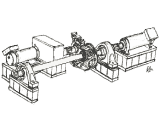
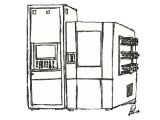
Drawing of a test stand for rail gearboxes

Rail gearbox test stand

  • Device under test: rail gearbox from a traction drive
  • Test task: full functional test after overhaul
  • Type: functional test stand, component test stand
  • Industry: rail

Built for overhauled rail gearboxes, this test stand adapts to different units. A measurement system captures vibration, acceleration and further parameters for detailed analysis.

Drawing of a wheel loader

Wheel loader end-of-line test stand

  • Device under test: small and mid-sized wheel loaders
  • Test task: end-of-line functional test before delivery
  • Type: EoL test stand
  • Industry: construction and agricultural machinery

Checks every function of the wheel loader, including hydraulics, electrics, brakes and safety systems, so each machine leaves the plant to specification.

Learn more

Test engineering

Why test stands often become outdated sooner than they should, and how four dimensions help you get requirements, modularity, scalability, and cost under control.

Case Study

How TMX Solutions upgraded the existing drive unit test stand for new vehicle platforms in three months, with a cost-effective design and seamless integration.

Test engineering

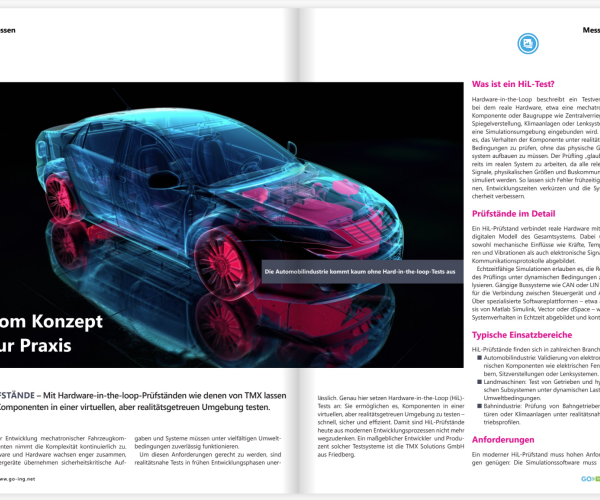
How do you test mechatronic components under realistic conditions before the full system exists? Our technical article from GO>>ing magazine explains HiL test stands using a power window motor as an example.

Test engineering

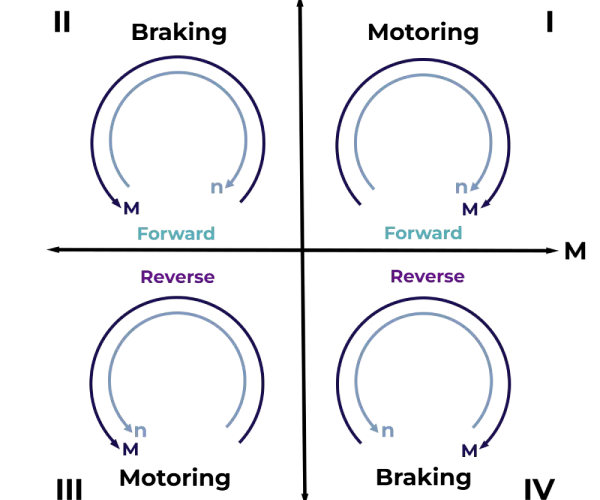
This article explains 4-quadrant operation and how motoring and generating modes combine to create realistic load profiles on a gearbox test stand.

Ready for a test stand built around your application?

Independent advice, transparent proposals. Book your free consultation.

Copyright 2026 TMX Solutions. All rights reserved.
Settings saved
Privacy settings

This website may use cookies for statistics and marketing purposes.

Technically required cookies are always loaded.

The following cookies may be set depending on your settings:

user_privacy_settings

Domain name: tmx-solutions.com
Expiry: 30 days
Storage: Local storage
Description: Stores the privacy settings from the "Privacy Manager" consent tool.

user_privacy_settings_expires

Domain name: tmx-solutions.com
Expiry: 30 days
Storage: Local storage
Description: Stores the expiry of the privacy level settings from the "Privacy Manager" consent tool.

ce_popup_isClosed

Domain name: tmx-solutions.com
Expiry: 30 days
Storage: Local storage
Description: Stores that the user closed the popup (content element "Popup").

Eclipse.outdated-browser: "confirmed"

Domain name: tmx-solutions.com
Expiry: 30 days
Storage: Local storage
Description: Stores the state of the "Outdated browser" notice bar.
Development & implementation
 
The TMX project workflow

Professional project management you can rely on

 
TMX technology

Discover the technology behind our test systems.

You are using an outdated browser. The website may not be displayed correctly.