What is data acquisition, and what really matters?
Introduction
In development, testing, and quality assurance, it is indispensable: measurement technology, or more precisely, data acquisition. Whether on a test stand, in the lab, or in a vehicle, on single components or a complete industrial plant: if you want to understand how systems work, how long they last, why they fail, and how to optimize them, you need reliable data from measurement systems. But what exactly does data acquisition (DAQ for short) mean, and what matters?
From the real world to a digital image: what is data acquisition?
Today, data acquisition (DAQ) means capturing physical quantities such as temperature, pressure, strain, speed, or displacement and converting them into digital data that can be stored, analyzed, and visualized. But before analog signals turn into reliable, usable information, a complex interplay of sensors, signal processing, digitization, storage, and software is needed.
At the heart of it all is the measurement chain, which the signal passes through step by step: Sensor → Amplifier → A/D converter → Data storage/software
The measurement chain: the backbone of every acquisition
To turn a real physical quantity such as temperature, pressure, or torque into a digital measured value or measurement series, the signal passes through several consecutive stages that together form the measurement chain:
1. Sensor / transducer
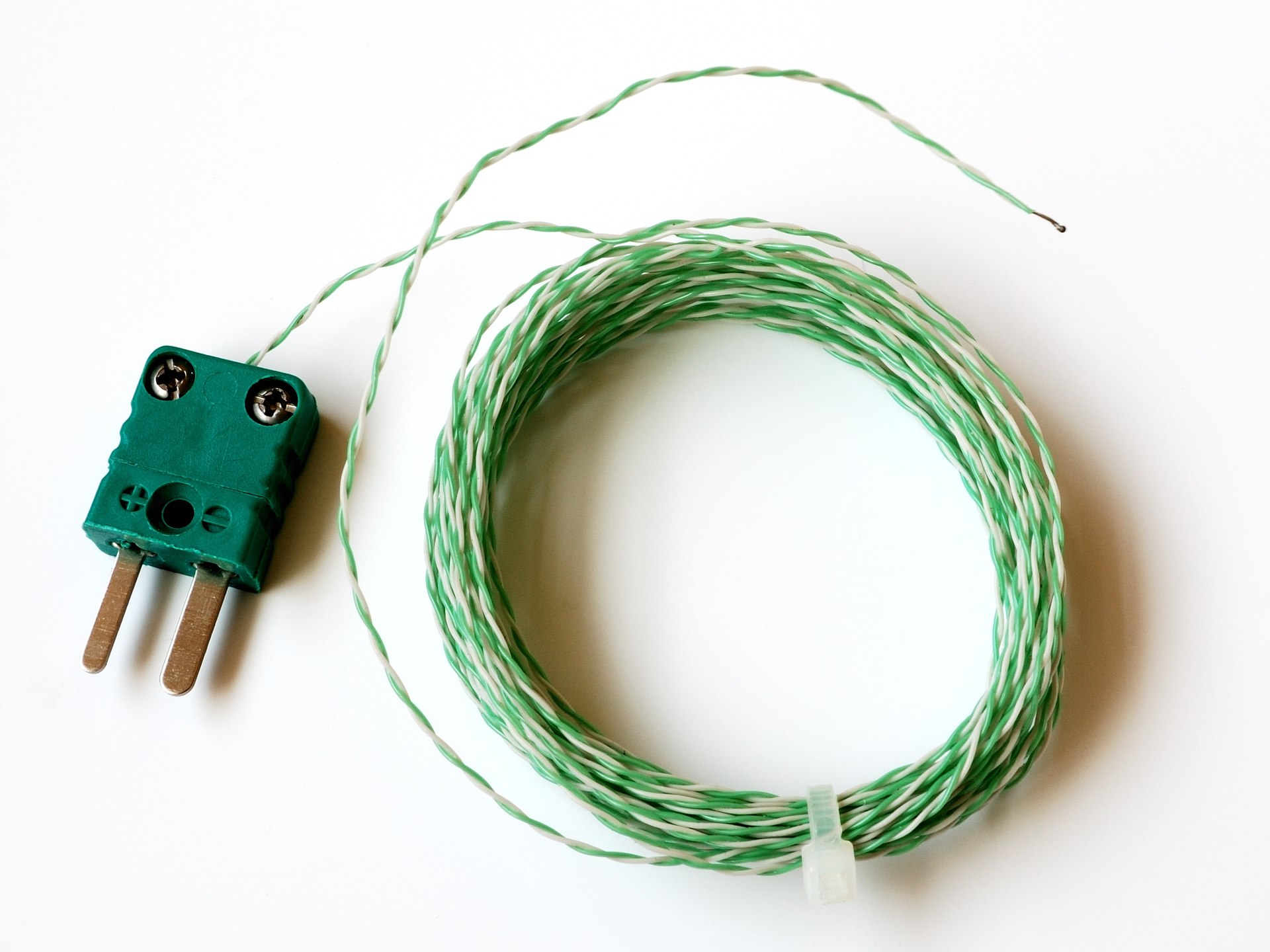
The sensor, also called a transducer, captures the physical quantity and converts it into an electrical quantity. In practice, these are often voltage or current signals, but resistance or frequency can also be typical outputs. A classic example: a thermocouple produces a small voltage of a few microvolts (µV) per kelvin of temperature difference.
2. Measurement amplifier / signal conditioner
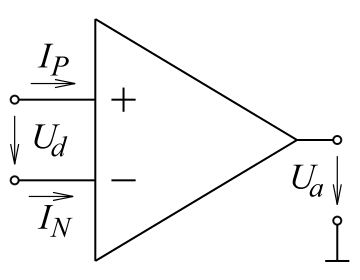
Before the signal can be digitized, it usually has to be normalized or amplified. If the signal is too small or too large, A/D converters cannot process it correctly. Measurement amplifiers therefore also handle linearization, scaling, and filtering, for example with anti-aliasing filters (AAF) to prevent interference during digitization.
3. Analog-to-digital converter (ADC)
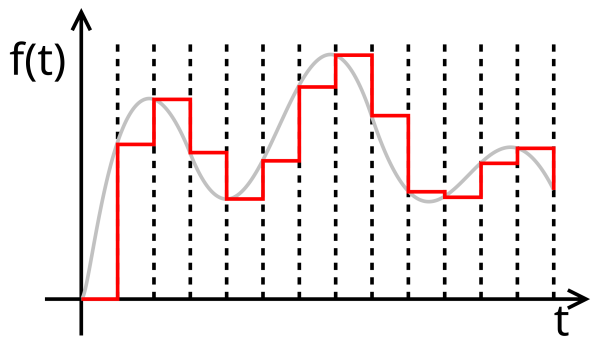
The ADC samples the analog signal at discrete time intervals and converts it into digital values. Two parameters are decisive: resolution (number of bits), which determines the achievable accuracy, and sampling rate, which sets how often per second a measurement is taken. According to the Nyquist-Shannon theorem, the sampling rate must be at least twice the highest signal frequency to be measured to avoid information loss and false effects (aliasing).
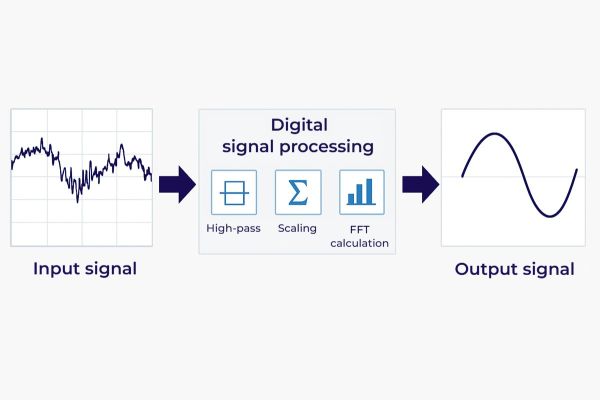
4. Digital signal processing (optional)
Modern systems allow initial (real-time) processing of the data before storage. FPGAs or DSPs perform, for example, digital filtering (high-pass, low-pass, band-pass), FFT calculations, averaging, or conversions (e.g., voltage to physical unit), in real time and sometimes already trigger-controlled.
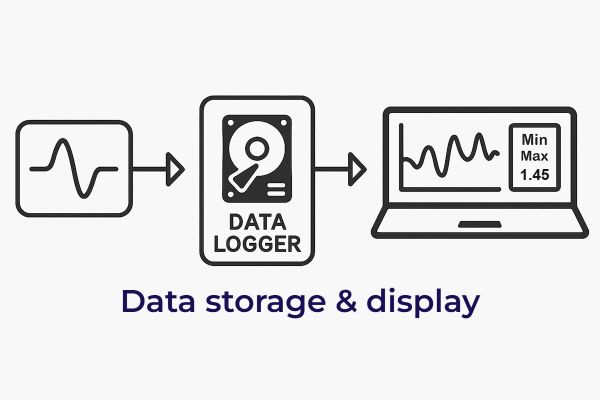
5. Data storage (data logging) and display
Finally, the acquired data are stored on a data logger, a connected PC, or directly in a controller. What matters is that storage is time-synchronous, stable, and complete, and that the data can easily be exported or analyzed when needed. Many systems use proprietary formats that are processed with specific software.
The quality of your data depends on the right design of the measurement chain:
- Sensors: selected according to the measured quantity and accuracy requirements
- Signal conditioning: filtering, amplification, and linearization of the raw signals
- A/D conversion: conversion into digital signals with sufficient resolution
- Data acquisition system (DAQ system) & software: storage, visualization, and triggering
What is a measurement system, and how does it differ from a data logger?
A measurement system is the combination of sensors, signal conditioning, A/D conversion, and software that together turn a physical quantity into digital data you can evaluate. It is the core of data acquisition. In our field, measurement systems are usually modular so they can flexibly cover different sensors and measurement tasks.
A data logger, by contrast, mainly records data, often from existing digital sources such as fieldbuses (e.g., CAN FD, LIN, XCPoE, Automotive Ethernet). Data loggers capture these digital signals passively, store them for later analysis, and are often used in mobile or protected long-term applications. Unlike a measurement system, a data logger typically does not convert analog signals into digital values.
The two can complement each other: the measurement system generates new measurement data, while the data logger records existing digital communication data or stores measurement data from the measurement system. Some modern measurement systems also integrate data loggers, so they can work fully standalone.
TMX tip: When choosing your measurement technology, don't look only at the bit count of the A/D converter. 24 bits sound good but help little if the sensor or amplifier is noisy; then you simply resolve the noise more finely. You achieve higher measurement quality with precise sensors and a high-quality measurement amplifier, which is what we focus on at TMX. Every part affects the end result; even a poorly shielded cable can lead to incorrect results.
What matters in practice
Professional data acquisition starts with planning. In our view, the key criteria are:

Time-synchronous sampling
Comparisons, for example between force, displacement, and time, are only possible if all channels are captured at exactly the same time. On test stands or in vehicle tests, this is a must. If you use different types of measurement amplifiers, always ask how their different signal delays are compensated.
Data quality
A good signal-to-noise ratio and a sufficiently high sampling rate deliver reliable results, not large amounts of data for their own sake.
Smart triggering
Why record everything all the time when only certain operating states are of interest? Event-based triggers reduce data volume and help with analysis. It is particularly efficient if your measurement system provides a live display at a low sampling rate while storing high-resolution data of the event when triggered.
Reliable data acquisition
Whether a long-term test or an endurance run, acquisition must be robust. Data should be saved regularly and protected from loss, for example by automatically closing files or buffering during a power failure.
Modular design
Data acquisition systems are often used intensively for 10+ years, especially on test stands and in labs, but also for mobile measurements. That makes it all the more important that they can adapt to changing requirements. A modular design lets you add measurement channels, signal types, or amplifiers without replacing the existing system. This avoids unnecessary investment and makes your system future-proof, however your test requirements evolve.
Common mistakes and how to avoid them
- Unclear requirements → clarify in advance which data are relevant for which question
- Wrong sensor choice → e.g., wrong temperature range or insufficient accuracy
- Undefined ground potentials and no EMC precautions → A well-thought-out grounding and power supply concept and clean shielding are basic requirements for interference-free measurements. Careful planning and signal routing prevent potential problems and reduce EMC effects.
- Unsynchronized channels → distorted relationships between measured quantities
- No monitoring → no one notices when a sensor fails or a cable comes loose
How TMX implements your data acquisition
At TMX Solutions, every project starts with a requirements analysis: Which measured quantities? What accuracy? What storage period?
Based on this, we develop a tailored measurement chain: robust, synchronized, and focused on what matters.
Our approach:
- Time-synchronous, modular measurement systems, even with many channels
- Adaptive triggering & online calculation directly in the measurement system
- Customizable software platforms such as imc STUDIO, Dewesoft, or LabVIEW
- Smart monitoring and professional reporting for reliable results and integrated documentation
Conclusion: measure well, develop better
Good data acquisition delivers more than numbers: it delivers information you can base decisions on. It helps you detect errors early, make systems more efficient, and bring products to market faster.
With TMX Solutions, you have a partner who masters the technology and also understands what you want to achieve with it.
YOUR NEXT STEP
Get in touch
We look forward to learning about your test and measurement tasks and developing solutions together that take your projects to the next level.